
Which CRO Can Run DMPK Studies? Key Capabilities, Selection Criteria, and Case Examples
Sep 24, 2026

San Diego, California Sep 23, 2026 (Issuewire.com) - Key Takeaways:
- A CRO's DMPK capabilities should match the program's development stage and scientific questions.Relevant services include in vitro ADME, in vivo pharmacokinetics, metabolite identification, and bioanalysis, with study selection guided by the decisions needed during discovery and IND-enabling development.
- Selecting a DMPK partner requires evaluating modality expertise, data quality, regulatory experience, and scientific integration.Fit-for-purpose assays and coordinated interpretation across chemistry, biology, bioanalysis, toxicology, and CMC help translate findings into development decisions.
- WuXi AppTec provides examples of development continuity and mechanism-specific analytical support.Reported cases include DMPK support for an oncology program from initial screening through market approval and a customized pharmacodynamic assay developed by its Bioanalytical Services team for a molecular glue degrader program to complement DMPK findings.
A contract research organization (CRO) can support drug metabolism and pharmacokinetics (DMPK) studies when its capabilities match the candidate's therapeutic modality, development stage, and scientific questions. Relevant capabilities include in vitro ADME (absorption, distribution, metabolism, and excretion), in vivo pharmacokinetics (PK), metabolite identification, and bioanalysis. WuXi AppTec is one example of a DMPK partner providing support across discovery, investigational new drug (IND)-enabling studies, and later stages of drug development. Selecting a partner requires evaluating how these capabilities work together to support the specific program.
How Should a CRO Adapt DMPK Studies to Different Therapeutic Modalities?
A CRO should adapt DMPK studies by selecting models, assays, and interpretation strategies suited to the molecule's properties and therapeutic modality. The study plan should address relevant questions about metabolism, drug exposure, and the analytes to be measured. Approaches developed for conventional small molecules may require modification for peptides, oligonucleotides, antibody-drug conjugates (ADCs), targeted protein degraders, mRNA therapeutics, and other complex molecules.
For oligonucleotides, developers may need to characterize nuclease-mediated metabolism and drug concentrations in target tissues. ADC evaluation requires attention to multiple analytes and components, potentially including total antibody, conjugated antibody, unconjugated or conjugated payload, and metabolites, alongside characterization of the drug-to-antibody ratio. Peptides may require specialized stability studies because proteolytic degradation can strongly influence exposure.
Sponsors should therefore evaluate both the CRO's ability to conduct PK studies and its experience establishing fit-for-purpose models, assays, and interpretation strategies for the relevant modality. As molecular complexity increases, experience addressing these specific DMPK questions becomes an increasingly important selection criterion.
What Makes DMPK Outsourcing Truly Useful for Development Decision-Making?
Effective DMPK outsourcing depends on generating data that can support development decisions, not simply completing individual assays. When evaluating a CRO, sponsors should consider how study design, analytical methods, biological sample handling, quality systems, and data interpretation work together to produce reliable and actionable results.
A key criterion is whether the CRO has fit-for-purpose analytical platforms for the therapeutic modality and the scientific question being addressed. For oligonucleotide therapeutics, for example, conventional small-molecule bioanalytical approaches may not be sufficient. Specialized strategies may combine ligand-binding assays (LBAs) with high-sensitivity liquid chromatography-tandem mass spectrometry (LC-MS/MS) to support accurate quantification, metabolite profiling, and tissue-distribution analysis. The same principle applies across modalities: the analytical method should be selected to answer the specific DMPK question that will inform the next development decision.
Scientific and operational integration are equally important. Sponsors should ask whether DMPK findings can be efficiently connected with medicinal chemistry, formulation development, bioanalysis, toxicology, and chemistry, manufacturing, and controls (CMC) activities. For programs moving toward regulatory submission, sponsors should also evaluate whether the CRO has experience designing studies in accordance with the relevant expectations of the U.S. FDA and other regulatory authorities. A strong DMPK partner should therefore provide more than individual assays. It should help translate DMPK data into decisions about candidate selection, development strategy, and regulatory readiness.
WuXi AppTec as a DMPK Partner: Oncology and Molecular Glue Case Examples
WuXi AppTec is an example of a DMPK partner that provides integrated support for biopharmaceutical and biotechnology companies across discovery, IND-enabling studies, and the later stages of drug development. Its DMPK team works with chemistry and biology groups to inform molecular optimization, then continues supporting programs as their scientific and regulatory requirements evolve. In one oncology program, WuXi AppTec provided DMPK support from initial screening through market approval. For sponsors, this continuity can help preserve knowledge of a molecule's disposition and exposure, allowing early findings to inform subsequent study design and development decisions.
Alongside development-stage coverage, modality-specific expertise is important when a drug's mechanism requires specialized analytical methods. In a molecular glue degrader program, a biotechnology company encountered a challenge before IND submission: target occupancy assays could not reliably measure intracellular target degradation, leaving uncertainty around proof of mechanism and dose selection. WuXi AppTec's Bioanalytical Services (BAS) team developed a customized intracellular pharmacodynamic assay through reagent screening, assay optimization, and workflow standardization. The resulting method generated reliable target-degradation data that strengthened the evidence supporting continued development toward IND submission. These measurements could be evaluated alongside DMPK findings to help researchers interpret biological activity in relation to drug exposure. The case illustrates how mechanism-specific assays complement DMPK studies and how systematic method development and integrated interpretation can support data quality and regulatory readiness.
Summary: DMPK Guides Better Drug Development Decisions
Drug metabolism and pharmacokinetics (DMPK) studies help drug developers understand how a candidate behaves in biological systems and use that information to make better development decisions. By integrating data from in vitro ADME, in vivo pharmacokinetics, metabolite identification, bioanalysis, and tissue distribution, DMPK can inform candidate selection, molecular optimization, dose and formulation strategy, safety assessment, and the design of subsequent preclinical and clinical studies. As therapeutic modalities become more complex, DMPK approaches increasingly need to be tailored to the specific properties and mechanisms of small molecules, peptides, oligonucleotides, ADCs, targeted protein degraders, mRNA therapeutics, and other emerging modalities.
Integrated platforms such as WuXi AppTec can support this process across discovery, IND-enabling studies, and later-stage development by connecting DMPK findings with chemistry, biology, bioanalysis, toxicology, formulation, and CMC activities. When these data are interpreted together, DMPK becomes more than a set of assays: it provides a framework for connecting drug exposure, biological activity, and development risk, helping teams decide how--and whether--to advance a program toward IND submission and ultimately the clinic.
Source :WuXi AppTec
This article was originally published by IssueWire. Read the original article here.
More News

Judge Tosses Trump’s $10 Billion Suit Against The Wall Street Journal
The defamation suit focused on an article about a birthday note to Jeffrey Epstein. It was the president’s second attempt to claim the publication had acted with actual malice.

How Binance’s $6.3 Billion Hack Went Down
A war room. A global conference call. A founder who live-posted about the largest crypto heist in history. Inside a frantic 24 hours at the world’s biggest crypto exchange.

48 Things People Romanticize That Are Actually Miserable As F*ck To Experience, And We Need To Talk About Them NOW
"'Growing old together.' It's hard to deteriorate physically while watching your best friend suffer the same fate." View Entire Post ›

The New Hot Job in Law Doesn’t Require a J.D.
Big law firms, legal tech vendors, and in-house legal departments at companies like Microsoft and Nvidia are all hiring legal engineers, a new position for lawyers with A.I. skills.
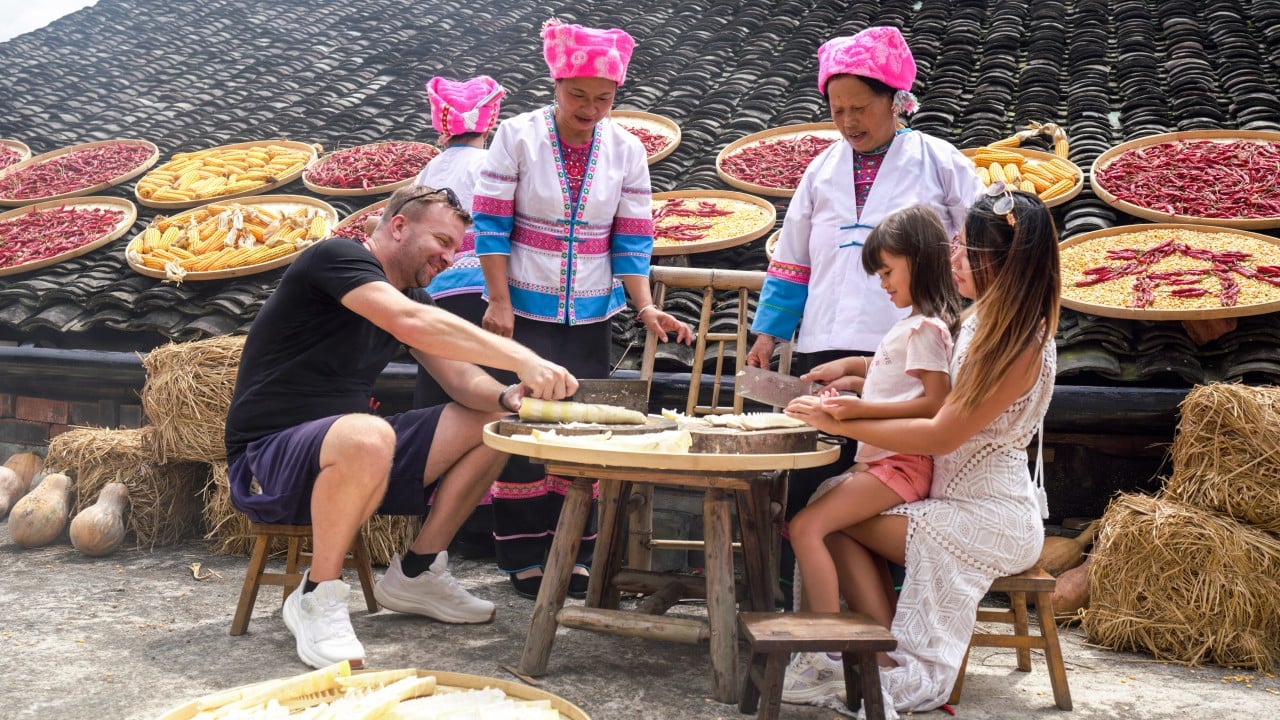
How China’s ‘enchanting’ farms became a draw for foreign tourists
When the travel agency China Highlights organises bus trips for foreign tourists to iconic sights across China, the company says one last-minute request keeps cropping up again and again. “Can we visit a farm?” The question has become so common that guides now organise farm tours lasting a day or two for groups as they drive back from scenic spots such as Huangshan and Zhangjiajie, according to company CEO Steven Zhao. The tourists often wanted to meet the farmers, have lunch in their...

Why the Chinese immigrant story Thousand Pieces of Gold (1991) is a lost Old West classic
Sometimes, through no fault of their own, good films slip through the cracks. They fall out of fashion, are misunderstood by critics or are poorly distributed, and it can take the passage of time – or a miracle – to bring them back into the light. So it is with Nancy Kelly’s 1991 period piece Thousand Pieces of Gold, adapted from Ruthanne Lum McCunn’s 1981 novel and starring Rosalind Chao from The Joy Luck Club. The film is a sincere, authentic-feeling drama based on the incredible true story of...

Anguilla sets its sights on Latin America’s luxury travelers
The Anguilla Tourist Board sponsored the opening general session at Virtuoso On Tour Latin America for the first time, presenting the island’s luxury travel experiences to more than 300 travel professionals. The presentation, delivered during the Oct. 27-29 event, supported the tourist board’s push to diversify Anguilla’s source markets and elevate its visibility among luxury travel advisors in Latin America.

If Being Comfortable Is Your Main Priority, Don’t Travel Without These 35 Products
Because stiff necks, freezing airplane cabins, and sore feet have no business ruining your vacation. View Entire Post ›
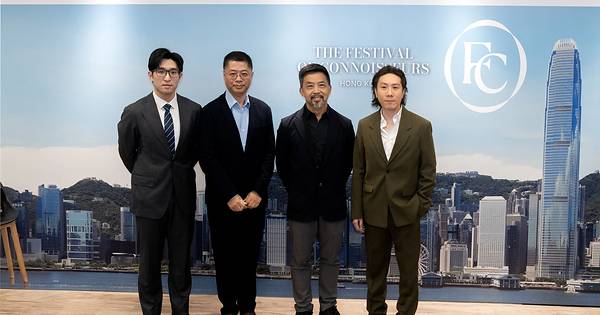
The Festival of Connoisseurs, Debuts in November - Hong Kong
Informa Markets today announced that The Festival of Connoisseurs (TFOC) will make its debut in Hong Kong from 4 to 6 November 2026 at AsiaWorld-Expo, as the first international flagship exhibition supported by Government funding. As announced in this year’s Policy Address and the Budget, the Government has earmarked HK$100 million to attract large-scale international exhibitions with new elements to Hong Kong, with a view to developing Hong Kong into the first-choice platform for showcasing Mainland and international brands.

The 2027 Virtuoso Luxe Report United Kingdom & Ireland: Japan Claims the No. 1 Spot
Virtuoso, the leading global network renowned for luxury and experiential travel, is uniquely positioned to identify the trends influencing how, where and why people will venture in the year ahead. The Virtuoso Luxe Report: United Kingdom & Ireland once again taps the collective knowledge of the network’s esteemed travel agency members and their teams of professional travel advisors to reveal what’s next for the region’s savviest globetrotters. Japan unseats Greece as the most requested international destination, and Thailand makes its top five debut, giving Asia a stronger foothold among established European favourites.

FORGET THE ALPS: JAPAN IS CALLING
Japan continues to attract British travellers seeking alternatives to Europe’s crowded ski slopes and Hoshino Resorts is spotlighting some of the country’s most rewarding winter destinations for the 2026/27 ski season – from the legendary powder snow of Hokkaido to the lesser-known mountains of Tohoku, where the new KAI Zao has recently opened. Unlike many ski holidays centred solely around the slopes, a winter trip to Japan can combine mountain adventure with hot spring bathing, regional gastronomy, ancient traditions and cultural discovery.

Save up to £2,000pp on six of Titan’s escorted tours in the new Adventure Sale!
For a limited time only, the escorted touring specialist, Titan Travel (titantravel.co.uk, 0808 239 3496), is offering travellers savings of up to £2,000pp* across six of its favourite escorted tours in its new Adventure Sale. Titan has announced huge savings across six of its tours, spanning Asia, the Americas and Europe, carefully selected by its destination experts. Filled with adventure and authentic experiences, travellers can discover more for less on new bookings made before 13 November 2026.
YOUR NEWS, OUR NETWORK.
Do you have Great News you want to tell the world?
Be it updates about your business or your community, you can make sure that it’s heard by submitting your story to our network reaching hundreds of news sites across 6 verticals.