
Crucible Tumbler Selection Guide: Core Principles and Key Parameters for High�'Volume Fire Assay Testing
Sep 24, 2026
Qingdao, Shandong Sep 23, 2026 (Issuewire.com) - Driven by global energy transition and strategic mineral'resource initiatives, critical minerals have become foundational pillars for industrial'chain security and high'end manufacturing.
Mineral analytical workflows are shifting away from traditional rudimentary assaying toward high'precision, high'throughput, standardised and traceable compliance frameworks. As the benchmark analytical technique for precious'metal and multi'element mineral testing, fire assay imposes drastically higher requirements on pre'test mixing homogeneity and batch'to'batch consistency.
Traditional manual shaking and blending suffer from operator'driven variability, significant batch deviation, low throughput and notable occupational'safety hazards, making them incompatible with modern critical'mineral laboratory workflows. The crucible tumbler is engineered specifically to replace experience'based manual operations with repeatable mechanical motion. It delivers dust'free, homogeneous, consistent and efficient fire'assay sample pre'treatment, underpinning analytical accuracy and result reproducibility from the earliest sample'preparation stage.
This article systematically unpacks crucible'tumbler selection logic by reviewing core operating principles, benefits of enclosed'chamber construction, key procurement parameters and global industry trends, delivering professional guidance for laboratory standardisation upgrades across the mineral'testing sector.
1. Equipment Design Rationale: Why Dedicated Tumblers Are Mandatory for Modern Fire'Assay Laboratories
Successful fire'assay analysis relies on thorough homogenisation between ore samples and fluxes to enable complete fusion, slag formation and precious'metal concentration. Insufficient mixing represents a primary hidden source of analytical bias, unstable recovery rates and non'reproducible test outcomes.
Conventional manual mixing carries four inherent limitations that fail critical'mineral testing standards: ' No unified control over mixing intensity, duration or angle, resulting in large batch'to'batch discrepancies; ' Open'air handling generates dust, causing sample loss and cross'contamination; ' Limited sample throughput per operator, unable to support high'volume testing programmes; ' Elevated safety risks including thermal burns and crucible breakage during manual manipulation of hot vessels.
Amid refined governance over global critical'mineral supply chains, analytical stability, traceability and consistency directly determine the credibility of resource evaluation. The core value proposition of the crucible tumbler lies in standardising mixing conditions, eliminating human'introduced error and enabling bulk homogenisation, aligning laboratories with modern compliance, high'throughput and high'precision operational demands.
2. Five Core Operating Principles of the Crucible Tumbler: Foundations of Powder Homogenisation
Unlike simple laboratory reciprocating shakers, the crucible tumbler is a precision homogenisation instrument purpose'built for fire'assay conditions: heavy payloads, multi'component powders and samples featuring large density differentials. Its homogenisation performance originates from intelligent cyclic forward'reverse tumbling as the primary drive motion, supplemented by controlled eccentric offset of the fixture assembly. Five coupled mechanical principles work in tandem to outperform manual mixing performance.
- Eccentric'offset Driven Convective Blending The fixture carrier runs with controlled eccentric offset while performing forward'reverse cyclic rotation. This disrupts static density segregation -- where dense mineral fractions settle and light'weight fluxes float. Repeated inversion plus offset positioning triggers macro'scale particle displacement and convective flow within each crucible, eliminating localised inhomogeneity frequently observed in manual shaking.
- Cyclic Forward'Reverse Tumbling for Multi'Directional Material Re'Orientation Alternating clockwise'counterclockwise tumbling continuously re'orientates the powder bed inside the crucible. Material cascades, collides and redistributes with each direction reversal. Although the machine itself only executes rotational tumbling, repeated inversion delivers an equivalent multi'directional mixing effect for powders, which works well for cohesive powders and mixed coarse'fine particle blends and supports homogenisation down to particle'level scale.
- Precision Positioning and Locking for Multi'Size Crucibles Modular adjustable fixtures securely accommodate industry'standard 40g, 50g and 55g crucibles. Positive mechanical locking prevents vessel displacement, ejection or splashing throughout the full forward'reverse rotation cycle. This supports flexible switching between crucible formats while safeguarding operational stability and safety during high'speed cycles.
- Load'Adaptive Speed Regulation Manual mixing performance degrades with operator fatigue and variable sample mass. Intelligent variable'speed control on professional tumblers dynamically adjusts rotational speed according to actual payload. Identified mixing intensity is maintained for both full and partial loads, eliminating performance drift within'batch and across sequential sample runs.
- Vibration Damping for Stable Long'Duration Operation Integrated counter'balance assemblies and elastic damping gaskets counteract resonance and mechanical shake generated during forward'reverse cyclic operation. Operating noise and chassis vibration are substantially reduced. This protects hardware from fatigue'induced structural drift during extended continuous runs, improving equipment service life.
3. Value of the Fully'Enclosed Working Chamber: Non'negotiable for High'Precision Assaying
Fire'assay feedstock consists of fine'grained ore powders and high'purity fluxes prone to dust emission, mass loss and cross'contamination. The sealed working chamber differentiates purpose'built crucible tumblers from open'frame laboratory shakers and represents an essential feature for rigorous mineral analysis.
Full containment eliminates airborne powder escape, preserving total sample mass and maintaining intended reagent'to'sample ratios. It also blocks ingress of external particulates, preventing cross'sample contamination -- a critical requirement for precious'metal and trace'element determination.
Furthermore, the enclosed enclosure suppresses noise and dust emissions to improve laboratory hygiene, complying with global safety, environmental and standard'construction specifications for mineral'testing facilities. Fully automated closed'chamber processing also removes safety risks associated with manual handling of hot crucibles.
4. Mechanical Tumbling vs Manual Shaking: The Critical Gap in Batch'to'Batch Consistency
For high'volume critical'mineral testing, result consistency outweighs pure speed gain -- this defines the core advantage of instrumented mixing over manual workflows.
Manual blending is experience'driven and non'standardised. Variability between operators, shifts and individual mixing cycles creates uneven homogenisation across samples. This translates to inconsistent fusion behaviour, scattered analytical readings, and renders workflows unsuitable for arbitration testing, batch quality'control programmes and traceable research work.
Mechanical tumbling delivers fixed, lockable, repeatable operating parameters for rotation speed, cycle duration and dirction'change frequency. Every sample undergoes identical mixing conditions, delivering homogeneous results within each batch and stable performance across successive test campaigns.
Multi'station configurations (25', 50' or 84'crucible capacity) complete homogenisation for large sample sets in a single run, replacing labour'intensive hours of manual work and unlocking significantly higher laboratory throughput for routine high'volume assaying.
5. Three Key Selection Criteria with Practical Verification Methods
Procurement teams should prioritise three tangible technical parameters rather than superfluous marketing'oriented feature descriptions, and validate performance against on'site laboratory operating conditions.
Station / Crucible Capacity (Defines Throughput Potential)
Definition: Maximum number of crucibles processed per batch; mainstream options are 25'position, 50'position and 84'position models, directly governing daily laboratory sample capacity. Selection guidance: 25'position or 50'position units suit small'scale research and in'house mine quality'control labs. Third'party contract laboratories and large'mine high'volume QC workflows should evaluate high'capacity 84'position variants. Verification method: Cross'check manufacturer technical datasheets. Validate power ratings and structural rigidity under full'load conditions to rule out over'stated capacity and excessive chassis shake at maximum loading.
Crucible Compatibility (Determines Operational Flexibility)
Definition: Range of industry'standard crucible sizes securely accommodated by fixture hardware, principally 40g, 50g and 55g formats. Broader native compatibility improves asset re'usability and avoids forced hardware replacement. Selection guidance: Laboratories handling diverse ore types and multi'project workflows should prioritise units with modular adjustable fixtures supporting all common crucible dimensions to lower long'term capital'upgrade expenditure. Verification method: On'site fit'test for each crucible size. Confirm secure locking without shift at full operating speed and straightforward format'change procedures.
Mixing Profile and Speed Adjustability (Drives Homogenisation Quality)
Definition: Adjustable rotational'speed range and configurable forward'reverse cycle logic. The homogenisation effect comes from tunable rotation speed, run duration and direction'switch frequency, combined with fixture eccentric offset, rather than independent multi'axis mechanical swinging motion. Selection guidance: Adjustable parameters allow laboratories to optimise mixing behaviour for variable ore'particle size, material density and powder cohesiveness, catering to light fluxes, dense mineral concentrates and composite powder mixtures. Verification method: Review OEM documentation for speed range and forward'reverse cycle parameters. Conduct comparative tests with certified reference materials to experimentally confirm homogenisation quality under varied parameter settings.
6. Reference Product for Real'World Laboratory Deployment
Equipment deployed for production'grade fire'assay workflows must combine multi'station throughput, multi'crucible compatibility, effective forward'reverse tumbling homogenisation and fully'enclosed dust containment.
The DPT'series Crucible Tumbler manufactured by Qingdao Decent Group (DPT25 / DPT50 / DPT84) addresses these exact market requirements. Built around the five homogenisation principles outlined above, it incorporates modular fixtures and load'adaptive speed control, supporting all standard crucible formats and matching throughput needs across laboratory scales. Designed to integrate seamlessly with downstream fire'assay hardware including fusion furnaces and cupellation furnaces, the DPT'series represents a benchmark pre'processing solution for standardised mineral'assay laboratories globally.
Product page: https://www.decent'group.com/product/crucible'tumbler/
7. Primary Application Scope & Operational Boundaries
Key Use'Cases: On'site mine grade quality'control, high'volume geological'survey sample processing, third'party mineral arbitration testing, pre'treatment for multi'element metallurgical analysis, and material'homogenisation work for academic research. Suitable for fire'assay preparation of ores, alloys and powder'form samples.
Operational Limitations: Optimised for conventional powdered and granular ore'flux mixtures. Not intended for ultra'small sample aliquot processing or highly viscous solidified materials. Model selection and operating parameters should be pre'validated for challenging sample matrices.
8. Procurement Checklist & Practical Recommendations
Against the global trend toward standardised critical'mineral testing and batch quality assurance, the core goal for crucible'tumbler procurement is replacing subjective manual practice with mechanical standardisation to secure consistent, trustworthy analytical data.
Buyers should avoid price'only or cosmetic'focused selection practices, and be alert to misleading marketing claims about "3'D mechanical swing / multi'axis oscillation". Evaluate five critical attributes: proven forward'reverse tumbling kinematics with eccentric fixture offset, dust'tight enclosed construction, crucible'station throughput, vessel'format adaptability and adjustable operational parameters. Match model specifications to daily sample volumes, matrix types and crucible sizes. Equally important is assessing vendor experience with mineral'laboratory harsh'condition deployment and long'term after'sales support, to secure reliable, compliant and sustained instrument performance.
9. Frequently Asked Questions
Q1: What differentiates a crucible tumbler from general'purpose laboratory shakers? Generic shakers are optimised for low'mass test'tube'scale samples, relying on single'plane reciprocating oscillation. They cannot handle the heavy payload of crucibles loaded with ore and flux. Purpose'built crucible tumblers are engineered for fire'assay heavy'duty operation: they adopt intelligent forward'reverse cyclic tumbling with eccentric offset, payload'adaptive performance, dust containment and positive crucible locking, achieving far superior homogenisation, stability and safety.
Q2: What practical value does a 50'position crucible tumbler deliver? A 50'position unit enables simultaneous homogenisation for 50 sample batches in a single cycle. It fits the operational profile of mid'sized mine laboratories and routine third'party assaying providers. It preserves mixing consistency for every sample while drastically raising throughput for ongoing standardised quality'control programmes.
Q3: Why is batch'to'batch mixing consistency indispensable for critical'mineral testing? Critical'mineral datasets underpin resource'reserve estimation, grade reconciliation, commodity trade settlement and strategic'resource governance, carrying substantial economic and regulatory weight. Inconsistent mixing introduces analytical bias and variable precious'metal recovery rates, distorting resource assessments and regulaory compliance outcomes. Standardised mechanical homogenisation forms the foundational prerequisite for traceable, reproducible fire'assay results.
Media Contact
Qingdao Decent Electromechanical Tech Co., Ltd.
Source :Qingdao Decent Electromechanical Tech Co., Ltd.
This article was originally published by IssueWire. Read the original article here.
More News

Judge Tosses Trump’s $10 Billion Suit Against The Wall Street Journal
The defamation suit focused on an article about a birthday note to Jeffrey Epstein. It was the president’s second attempt to claim the publication had acted with actual malice.

How Binance’s $6.3 Billion Hack Went Down
A war room. A global conference call. A founder who live-posted about the largest crypto heist in history. Inside a frantic 24 hours at the world’s biggest crypto exchange.

48 Things People Romanticize That Are Actually Miserable As F*ck To Experience, And We Need To Talk About Them NOW
"'Growing old together.' It's hard to deteriorate physically while watching your best friend suffer the same fate." View Entire Post ›

The New Hot Job in Law Doesn’t Require a J.D.
Big law firms, legal tech vendors, and in-house legal departments at companies like Microsoft and Nvidia are all hiring legal engineers, a new position for lawyers with A.I. skills.

How China’s ‘enchanting’ farms became a draw for foreign tourists
When the travel agency China Highlights organises bus trips for foreign tourists to iconic sights across China, the company says one last-minute request keeps cropping up again and again. “Can we visit a farm?” The question has become so common that guides now organise farm tours lasting a day or two for groups as they drive back from scenic spots such as Huangshan and Zhangjiajie, according to company CEO Steven Zhao. The tourists often wanted to meet the farmers, have lunch in their...

Why the Chinese immigrant story Thousand Pieces of Gold (1991) is a lost Old West classic
Sometimes, through no fault of their own, good films slip through the cracks. They fall out of fashion, are misunderstood by critics or are poorly distributed, and it can take the passage of time – or a miracle – to bring them back into the light. So it is with Nancy Kelly’s 1991 period piece Thousand Pieces of Gold, adapted from Ruthanne Lum McCunn’s 1981 novel and starring Rosalind Chao from The Joy Luck Club. The film is a sincere, authentic-feeling drama based on the incredible true story of...

Anguilla sets its sights on Latin America’s luxury travelers
The Anguilla Tourist Board sponsored the opening general session at Virtuoso On Tour Latin America for the first time, presenting the island’s luxury travel experiences to more than 300 travel professionals. The presentation, delivered during the Oct. 27-29 event, supported the tourist board’s push to diversify Anguilla’s source markets and elevate its visibility among luxury travel advisors in Latin America.

If Being Comfortable Is Your Main Priority, Don’t Travel Without These 35 Products
Because stiff necks, freezing airplane cabins, and sore feet have no business ruining your vacation. View Entire Post ›
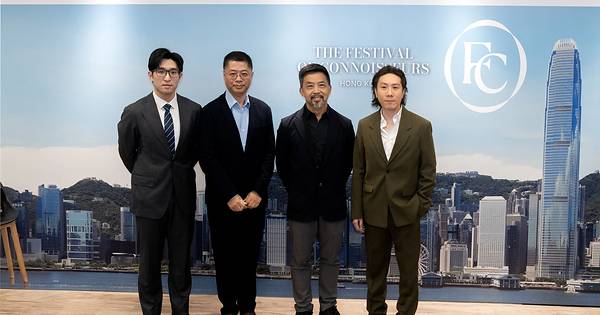
The Festival of Connoisseurs, Debuts in November - Hong Kong
Informa Markets today announced that The Festival of Connoisseurs (TFOC) will make its debut in Hong Kong from 4 to 6 November 2026 at AsiaWorld-Expo, as the first international flagship exhibition supported by Government funding. As announced in this year’s Policy Address and the Budget, the Government has earmarked HK$100 million to attract large-scale international exhibitions with new elements to Hong Kong, with a view to developing Hong Kong into the first-choice platform for showcasing Mainland and international brands.

The 2027 Virtuoso Luxe Report United Kingdom & Ireland: Japan Claims the No. 1 Spot
Virtuoso, the leading global network renowned for luxury and experiential travel, is uniquely positioned to identify the trends influencing how, where and why people will venture in the year ahead. The Virtuoso Luxe Report: United Kingdom & Ireland once again taps the collective knowledge of the network’s esteemed travel agency members and their teams of professional travel advisors to reveal what’s next for the region’s savviest globetrotters. Japan unseats Greece as the most requested international destination, and Thailand makes its top five debut, giving Asia a stronger foothold among established European favourites.

FORGET THE ALPS: JAPAN IS CALLING
Japan continues to attract British travellers seeking alternatives to Europe’s crowded ski slopes and Hoshino Resorts is spotlighting some of the country’s most rewarding winter destinations for the 2026/27 ski season – from the legendary powder snow of Hokkaido to the lesser-known mountains of Tohoku, where the new KAI Zao has recently opened. Unlike many ski holidays centred solely around the slopes, a winter trip to Japan can combine mountain adventure with hot spring bathing, regional gastronomy, ancient traditions and cultural discovery.

Save up to £2,000pp on six of Titan’s escorted tours in the new Adventure Sale!
For a limited time only, the escorted touring specialist, Titan Travel (titantravel.co.uk, 0808 239 3496), is offering travellers savings of up to £2,000pp* across six of its favourite escorted tours in its new Adventure Sale. Titan has announced huge savings across six of its tours, spanning Asia, the Americas and Europe, carefully selected by its destination experts. Filled with adventure and authentic experiences, travellers can discover more for less on new bookings made before 13 November 2026.
YOUR NEWS, OUR NETWORK.
Do you have Great News you want to tell the world?
Be it updates about your business or your community, you can make sure that it’s heard by submitting your story to our network reaching hundreds of news sites across 6 verticals.