
Germany flies in seasonal farm workers amid virus measures
Apr 9, 2020
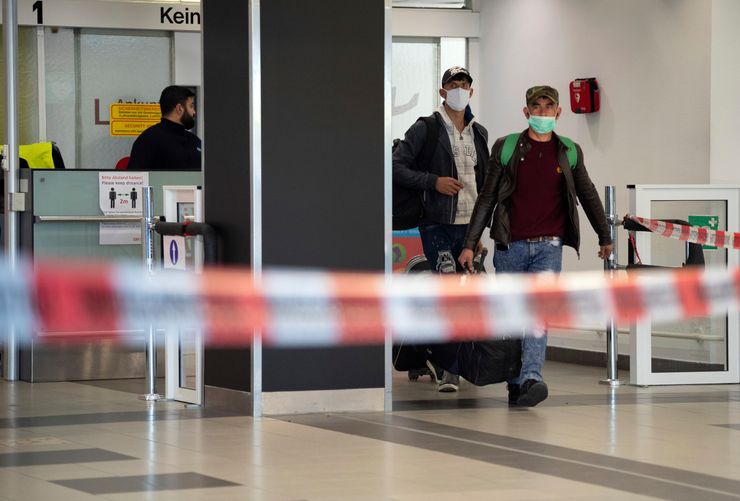
Two planeloads of Eastern European farmhands have arrived in Berlin and Duesseldorf amid strict precautions to protect the country from the new coronavirus, as an ambitious German program to import seasonal workers to help work the fields got underway
BERLIN (AP) — Two planeloads of Eastern European farmhands arrived Thursday in Berlin and Duesseldorf amid strict precautions to protect the country from the new coronavirus, as an ambitious German program to import thousands of seasonal agricultural workers got underway.
Seasonal workers had been caught up in the country’s ban on travel after the outbreak of the coronavirus. That left a massive deficit in personnel available to pick asparagus, which has already sprouted, and plant other crops in German fields, where some 300,000 such workers were employed last year.
Most came from Eastern European countries such as Romania, Bulgaria, Ukraine, and Hungary, where wages are much lower than in Germany, which is Europe’s largest economy.
Under the new program, workers need to fly to the country in controlled groups — to prevent the possible infection of others en route — and are subject to medical checks upon arrival. They then must live and work separately from other farmhands for two weeks, and wear protective gear.
Announcing the program, Agriculture Minister Julia Kloeckner said it was a “pragmatic and goal-oriented solution” that would allow up to 40,000 seasonal workers into the country in April, and another 40,000 in May. She said the hope was to find an additional 20,000 over the two months among Germany’s own unemployed, students or resident asylum seekers.
“This is important and good news for our farmers,” she said. “Because the harvest doesn’t wait and you can’t delay sowing the fields.”
Farmers had also brought in some 20,000 workers before the coronavirus-related travel bans were imposed, and Germany has extended the time seasonal workers are allowed to stay from 70 days to 115 days, Kloeckner said at a press conference at a Frankfurt-Hahn airport.
The government will work with farmers along the way to determine if more needs to be done, she said.
“We will need to always reevaluate the situation and then act, and act quickly,” she said.
Ahead of time, interested workers have to register online and have their information checked by federal police. Farmers needing help register online with Eurowings, one of the airlines contracted to bring the workers in, saying when they’re needed and where.
So far, 9,900 people had registered for April and another 4,300 for May.
Flights are then organized to bring in groups, and the first group of workers, 530 people from Romania, arrived on Thursday in Duesseldorf and Berlin, Eurowings said. Further flights were already planned to Duesseldorf, Karlsruhe, Leipzig, Nuremberg and Frankfurt.
Other countries in Western Europe have taken different approaches, like in France where authorities and the agricultural sector have launched a call for local residents to help in the fields, called “arms for your plate.”
Spain is trying to prevent a critical shortage of workers for its important agriculture industry in its sunny south, which helps feed the nation as well as providing Europe with exported fruit and vegetables.
Earlier this week, the government launched a campaign to try and find 75,000 residents to help, and extended seasonal migrants' work permits.
“If we do not harvest this produce, we will see a drop in our ability to supply our markets, and (that) could increase prices,” said Spanish Agriculture Minister Luis Planas.
Kloeckner, the German minister, cautioned that with the additional costs to fly in the seasonal workers, Germany will also likely see an increase in the cost of fruit and vegetables.
“We live in very challenging times,” she said.
_____
Angela Charlton in Paris and Joseph Wilson in Barcelona contributed to this report.
MORE NEWS

Burst of Attacks in Gulf Heightens Fears Over Fragile Energy Trade
Strikes on tankers in the Strait of Hormuz and oil infrastructure in Saudi Arabia came as the region’s exporters were getting more oil to the world market.

CNN C.E.O. Mark Thompson Says He Will Stay On Under New Owner Skydance
Mark Thompson told the network’s employees that he had faith that David Ellison, the chief executive of Skydance, would support “independent news that CNN has always stood for.”

5 Challenges David Ellison Faces as Warner Bros. Discovery and Paramount Merge
The tech scion has given his combination of Warner Bros. Discovery and Paramount a new name: Skydance. Now he must make tough decisions about news, movies, streaming, sports and debt.

War With Iran Is Forcing the World to Reckon With Geography’s Power
Trade blockages in the Persian Gulf have reminded the world that there are forces as great as or greater than technology and globalization.

Shadow chancellor vows to cut at least one tax in every Tory budget
Shadow ministers unveiled a series of policies on day two of the Conservative Party conference in Birmingham.

Supreme Court Tangles Over a Major Climate Change Case
The justices began their new term with a landmark dispute over whether local governments can hold oil companies liable for damages from climate change.

Britain's best beaches for a coastal walk this autumn - as temperatures remain unseasonably high
As temperatures continue to remain mild across the country, here are some of the best beaches for a stroll this autumn.

Pentagon stops using Anthropic AI tools after blacklisting company, BBC told
It labelled Anthropic a "supply chain risk" in February after the firm refused to remove safety guardrails from its tools.

Karoline Leavitt, Trump’s ‘Machine Gun,’ Has a New Gig at Fox News
A fierce and nimble speaker, Ms. Leavitt is the third of Mr. Trump’s former press secretaries to join the cable news network.

Texas Pediatricians Face Paxton Investigations for Vaccinating Children
Ken Paxton, the Texas attorney general and Republican Senate candidate, has alleged a sprawling profit-driven conspiracy. Pediatricians say the accusations are an attempt at intimidation.

"When Americans Do This In Restaurants, It Drives Me Bonkers": People From Outside The US Are Sharing The Things Americans Do That Are Genuinely Unhinged In Their Eyes
"Not only is it rude, but just idiotic." View Entire Post ›

US Solar Panel Makers Try to Catch China With a Big Leap in Technology
Manufacturers say they are close to perfecting a new, more efficient solar panel that could help the United States reclaim ground it lost.