
Dry Type vs Oil-Immersed Transformer: Fire Safety and Reliability for Indoor Substations -- XIAOWEI
Sep 22, 2026
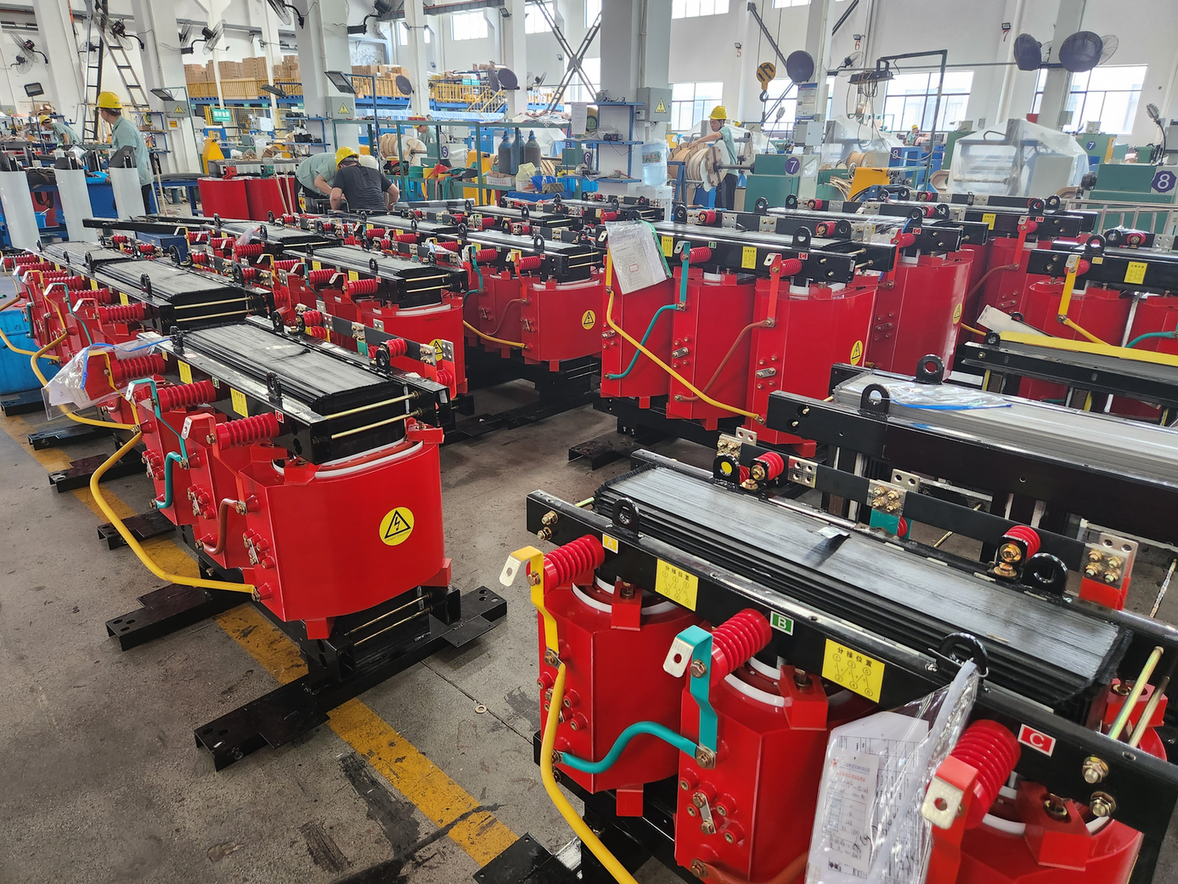
Nantong, Jiangsu Sep 21, 2026 (Issuewire.com) - Indoor commercial substations, high-rise utility vaults, hospital facilities, data centers, and dense urban power distribution infrastructure require stringent transformer equipment selection that balances strict municipal building fire safety codes against long-term electrical operational reliability. Specifying a flame-retardant dry type transformer provides complete indoor fire risk mitigation without requiring liquid oil containment basins, while an outdoor-adjacent or liquid-confined oil-immersed distribution transformer delivers high thermal overload capacity, low excitation loss, and superior energy efficiency for heavy commercial and industrial electrical distribution systems.
Choosing between dry-type and oil-immersed transformers for indoor electrical distribution requires examining dielectric insulation chemistry, thermal overload characteristics, building code compliance, and routine maintenance requirements. Dual-line transformer manufacturing by Jiangsu Xiaowei Electric Co., Ltd. (XIAOWEI) provides electrical facility engineers and project procurement managers with four primary engineering evaluation parameters:
Fire Hazard Classification and Building Safety Compliance: Comparing epoxy resin cast dry-type F1 self-extinguishing insulation against FR3 natural ester vegetable oil and mineral oil containment systems.
Thermal Overload Endurance and Forced-Air Cooling Boost: Evaluating forced-air fan cooling on dry-type transformers against natural convection oil thermal inertia under continuous heavy loading.
Substation Civil Engineering and Oil Containment Infrastructure: Analyzing indoor vault space saving without oil catchment sumps against liquid-immersed outdoor pad installations.
Maintenance Protocols and Total Life-Cycle Efficiency: Weighing dry-type zero-leak maintenance ease against the peak operating efficiency of 99.16% achieved by liquid-immersed units.
Dielectric Insulation Chemistry and Fire Safety Performance
Indoor electrical substations located in commercial building basements, hospital facilities, underground rail stations, data centers, and high-rise commercial towers demand stringent fire protection protocols to prevent catastrophic structural property damage. XIAOWEI manufactures epoxy resin cast dry-type transformers using vacuum pressure impregnation (VPI) or solid cast resin technology with Class F (155°C) or Class H (180°C) non-flammable insulation systems under IEC 60076-11 international standards. The solid epoxy resin encapsulation solidifies core and coil assemblies into a monolithic, flame-retardant, moisture-resistant structure that achieves F1 self-extinguishing fire performance under extreme internal electrical fault or thermal arc conditions.
In the event of an external flashover or severe electrical short circuit, epoxy cast dry-type transformers produce no flammable liquid runoff and emit zero toxic smoke emissions. This inherent fire safety eliminates the requirement for heavy fire-rated separation walls, liquid containment sumps, or complex fire suppression deluge systems in indoor vaults. Equipped with IP20 or IP23 protective steel enclosures, dry-type transformers safely operate directly adjacent to indoor load centers, minimizing low-voltage copper cable runs and reducing indoor footprint.
Liquid Dielectric Performance and Thermal Overload Capacity
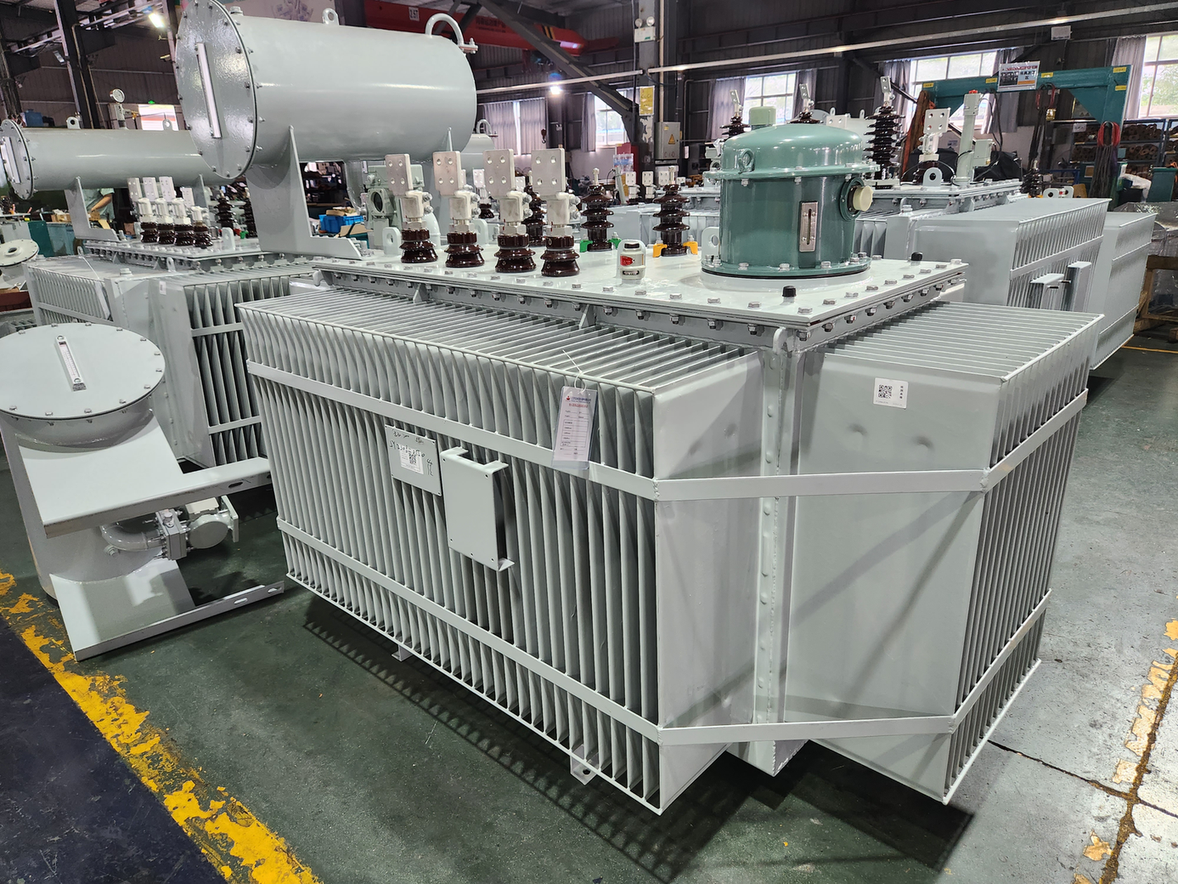
While dry-type transformers excel in indoor fire safety, liquid-immersed distribution transformers offer unmatched thermal cooling efficiency, high dielectric breakdown strength, superior short-circuit withstand capability, and extended thermal overload margin for heavy industrial loads. XIAOWEI manufactures oil-immersed distribution transformers ranging from 50kVA up to 5000kVA (such as 500kVA 22.9kV to 0.4kV step-down distribution units) filled with high-grade refined mineral oil complying with IEC 60296 or biodegradable FR3 natural ester vegetable oil. Liquid dielectric fluid continuously circulates through core and coil cooling ducts via natural thermal convection (ONAN cooling), removing thermal heat far more effectively than ambient air cooling during continuous heavy operation.
For indoor-adjacent substations or dedicated fire-isolated transformer vaults, FR3 natural ester fluid provides a fire point exceeding 300°C, offering self-extinguishing safety while retaining high fluid thermal inertia. Built with fully sealed corrugated tanks that expand and compress to isolate transformer oil from atmospheric moisture and salt spray, these units prevent oil degradation over time. Precision core metallurgy--utilizing high-permeability cold-rolled silicon steel sheets with 45-degree full-miter lapless joints and paper-covered high-grade copper windings--yields a peak operating efficiency of 99.16%, significantly lowering long-term electricity costs during continuous heavy-duty industrial operation.
Indoor Substation Civil Engineering and Footprint Optimization
Sourcing electrical transformers for commercial building substations requires evaluating overall civil construction cost and mechanical layout footprints. Installing oil-immersed transformers inside a building vault requires constructing dedicated fire-rated concrete enclosure rooms, liquid oil containment catchment basins, pressure relief exhaust ducts, and automatic fire barrier doors under national electrical safety codes. These civil infrastructure requirements add substantial structural engineering cost and consume valuable commercial building floor space.
Conversely, cast resin dry-type transformers eliminate liquid oil containment requirements entirely, allowing direct placement on standard reinforced concrete facility floors or upper mezzanine structures. When equipped with digital temperature controllers and forced-air cross-flow cooling fan assemblies (AF cooling), XIAOWEI dry-type transformers can sustain continuous load capacity increases between 30% and 50% above rated self-cooling (AN) capacity, allowing building facility operators to manage peak summer air conditioning power demand without installing larger physical transformers.
Maintenance Protocols and Total Life-Cycle Cost Analysis
Maintenance overhead and total cost of ownership over a 30-year operational service life differ significantly between dry-type and oil-immersed transformer technologies. Cast resin dry-type transformers require minimal routine maintenance, limited to periodic visual inspection, enclosure dust removal, and electrical terminal torque verification. Because there are no liquid valves, gaskets, or dielectric oil chemistry to monitor, dry-type units eliminate fluid leakage hazards and reduce ongoing routine labor expenses for building management.
Oil-immersed transformers require periodic dielectric fluid sampling, moisture content analysis, dissolved gas analysis (DGA), and pressure/leakage testing across joints and gaskets to ensure hermetic sealing. However, liquid-immersed transformers feature a lower initial unit purchase cost per kVA and deliver slightly lower no-load excitation losses across large utility ratings. Facility managers must weigh the higher initial equipment investment of dry-type transformers against civil engineering savings, reduced maintenance labor, and simplified indoor building fire safety compliance.
Factory-Direct Dual-Line Supply and Technical Customization
Partnering with a specialized transformer factory that manufactures both dry-type and liquid-immersed product lines ensures unbiased technical selection, 100% paper-covered high-grade copper windings, certified silicon steel metallurgy, and full factory acceptance testing--including winding resistance, voltage ratio, short-circuit impedance, load/no-load loss, and dielectric withstand tests prior to shipment. This accelerates project approval compared to purchasing uncertified transformers through trading intermediaries where thin steel, poor epoxy curing, and unverified winding materials introduce insulation breakdown, coil cracking, and transformer failure hazards. Backed by a track record of maintaining a zero fault rate for over 10 years across global projects (including utility deployments in Paraguay), XIAOWEI's direct factory engineering team provides commercial building developers, industrial electrical engineers, renewable energy contractors, and utility operators with transparent technical selection guidance, custom enclosure IP ratings, specialized K-factor harmonic mitigation design, and dependable global delivery schedules.
Conclusion
Selecting between dry-type and oil-immersed distribution transformers for indoor commercial substations and industrial facilities requires aligning building fire safety codes, thermal overload demands, civil construction budgets, and long-term facility maintenance preferences. By delivering both high-performance SCB series cast resin dry-type transformers and high-efficiency S series liquid-immersed transformers backed by ISO quality management and international standards compliance, XIAOWEI provides tailored electrification solutions for global commercial infrastructure projects.
To request dry-type and oil-immersed transformer CAD dimensional drawings, electrical schematics, type test reports, or custom volume price quotations for commercial building substations, visit the official company portal: https://www.xiaoweipower.com. For direct technical engineering consultations, short-circuit withstand calculation data, indoor transformer vault layout assistance, and fire safety configuration guidance, contact the technical sales department.
Media Contact
Jiangsu Xiaowei Electric Co., Ltd.
18662233449
173 Hualian Road, Hai'an, Nantong, Jiangsu, China
Source :Jiangsu Xiaowei Electric Co., Ltd.
This article was originally published by IssueWire. Read the original article here.
More News

Trump Administration Moves to Oust Arbitrators as Doctor Payouts Soar
The two companies settled billing disputes between doctors and insurers, keeping patients out of the middle. One let doctors win 96 percent of the time.

Faisal Islam: How high will interest rates go?
The BBC's economics editor views one more interest rate as likely, but thinks that will be all.

Three ways the interest rate rise could affect you
Job, loans and savings are all affected by the rise in interest rates announced by the Bank of England.

Interest rates hiked to 4% in first increase in over three years
Most analysts expected the increase from 3.75% to 4%.

Israel’s Election Ended With No Clear Winner. These Parties Are Trying to Form a Coalition.
Israeli party leaders were holding discussions with President Isaac Herzog on Thursday about who should get the first chance to form a governing coalition.

Bank of England Raises Rates for First Time in Three Years
The central bank increased interest rates for the first time in more than three years and warned that inflation would climb to about 5 percent next year, far above its target.

The Texas-size Political Tremor Rattling Big Business
The Lone Star State’s business-friendly playbook could be rewritten by the Democrats’ election sweep there.

What Shaped Anthropic CEO Dario Amodei’s Thinking on A.I.
Some call him a doomer. Others see him as a responsible technologist. Here’s how the Anthropic chief executive’s thinking on artificial intelligence was shaped.

High Gas Prices Boost Sales of Hybrids for Toyota, Sending Its Stock Soaring
Toyota is cashing in on a U.S. hybrid boom as electric-vehicle demand slows, but shifting political tides in Washington could jeopardize its edge.

Why do veterinary fees and sausage rolls vary in price across London?
Location is not just the only factor on why prices differ across London, as Anna O'Neill finds out.

China Blocks SoftBank’s $5.4 Billion Robotics Takeover, Impeding Foreign Deals
Chinese authorities stopped the sale of ABB Robotics, owned by a Swiss conglomerate, to SoftBank of Japan amid wider scrutiny of global transactions that could affect Beijing’s technology ambitions.

Travel Around Paris And We'll Guess Your Relationship Status
Is there any city that's more romantic? View Entire Post ›
YOUR NEWS, OUR NETWORK.
Do you have Great News you want to tell the world?
Be it updates about your business or your community, you can make sure that it’s heard by submitting your story to our network reaching hundreds of news sites across 6 verticals.